Max T Review: A Detailed Look at Its Testosterone-Support Formula and Research
An evidence-aware Max T review covering its named extracts, nutrient amounts, hormone-study details, daily format, bundle pricing, and current order considerations.

Max T is an appealing coordinated botanical-and-nutrient option for men researching vitality support. Its strongest verified features are ingredient detail and bundle value; confirm the serving basis and judge hormone claims against the exact evidence.
A recognizable formula for a research-minded buyer
Max T Testosterone Support makes a clear offer to men who want a coordinated supplement rather than a collection of unrelated bottles. Its T-Synex presentation centers on testosterone support and male vitality, while the displayed panel combines fenugreek, Long Jack, KSM-66 ashwagandha, magnesium, zinc, vitamin B6, and a supporting complex. That range gives a hormone-focused buyer several specific features to investigate and compare.
This review is based on the current official product page, its displayed label, relevant policies, and published human ingredient studies. It does not describe hands-on use, laboratory changes in a reviewer, or a clinical trial of the finished bottle. The attractive proposition is practical and identifiable: recognizable extracts, a nutritional component, a daily-product format, and more than one purchase size. The science becomes most useful when each of those features is connected to the outcome actually being considered.
Begin with the difference between support and treatment
A man can be interested in vitality supplements without having a diagnosed endocrine condition. Shopping for a coordinated botanical formula is a different decision from treating confirmed testosterone deficiency. The Endocrine Society recommends evaluating compatible symptoms together with consistently low testosterone measurements, rather than inferring a diagnosis from fatigue, a single result, or advertising language. That framework helps keep the product comparison relevant to the reader's circumstances.
Max T can be explored as a men's-wellness purchase while clinical hormone concerns follow their own assessment. This distinction is useful rather than discouraging: it prevents a broad category name from doing the work of a diagnosis and allows the actual formula to receive attention. Someone interested in ingredients and convenience can assess those directly. Someone seeking correction of a measured deficiency needs evidence and care appropriate to that specific condition.
The quantified core is a positive feature
The current label's Vasoflux Matrix lists 450 milligrams of fenugreek,406.5 milligrams of Long Jack, and 225 milligrams of KSM-66 ashwagandha root. Its NitroX System supplies 124.5 milligrams of magnesium as oxide,22.5 milligrams of zinc as oxide, and 7.5 milligrams of vitamin B6 as pyridoxine hydrochloride. Seeing these forms and quantities gives buyers a more substantive starting point than a generic vitality blend.
The panel says amount per serving but does not display a serving-size or capsule-count line. The page describes one capsule daily, yet that statement alone does not establish that all panel quantities refer to one capsule. Confirming the complete bottle instructions is therefore essential before comparing a daily exposure with a study. That clarification would improve an otherwise appealing degree of ingredient specificity and help a purchaser integrate Max T with an existing supplement routine.
Fenugreek offers a real research conversation
Fenugreek is a central part of the current formula, and the panel describes its extract as 50 percent Fenusides. For a buyer who likes to understand botanical selection, a standardization statement is helpful. It makes the question more precise than whether fenugreek is generally popular: which extract was supplied, what amount is in the confirmed serving, and which human research is being used to explain its inclusion?
The current page also uses Testofen-type language. That should not be interpreted as authenticated sourcing of a specific branded research ingredient, because the displayed label supplies a different form of identification. Extract matching matters when translating research. Max T's fenugreek entry is a worthwhile feature to investigate, while the exact relationship between its extract and any particular trial needs documentation. This is how a promising ingredient becomes part of an informed buying decision rather than an unexamined assumption.

A recent trial shows why endpoints matter
A 2024 randomized fenugreek trial examined a particular extract over twelve weeks and measured testosterone in more than one biological medium. Plasma and saliva results did not tell an identical story. Changes from baseline were not uniformly accompanied by superiority over placebo, and the study did not establish a broad subjective benefit. These details are important because a product-page percentage can otherwise appear more decisive than the actual comparison supports.
That trial did not test Max T. Its value here is methodological as well as botanical: it shows why a buyer should ask which outcome was measured and how it compared with the control condition. An increase in one measurement is not automatically improved energy, sexual experience, or clinical correction of deficiency. The positive feature remains a formula built around an identifiable research-relevant plant, with a clear opportunity to investigate the extract rather than rely on a name alone.
Long Jack broadens the botanical rationale
Long Jack, commonly called tongkat ali, is another recognizable ingredient for men researching vitality. A randomized study of a specific aqueous Eurycoma longifolia preparation followed 109 men aged 30 to 55 for twelve weeks and reported favorable selected sexual-well-being findings. That provides a human-study connection and helps explain why the botanical appears in a broad men's-support formula.
The trial used 300 milligrams daily of its own extract. Max T's displayed 406.5-milligram amount does not prove equivalence or greater effectiveness, because extraction and standardization can differ. Its supporting list also includes tongkat ali without an individual quantity, leaving total exposure unclear. The useful conclusion is that the botanical has a legitimate research pathway, while the retail combination requires its own assessment. A sexual-well-being endpoint also should not be silently converted into a guaranteed free- or total-testosterone increase.
KSM-66 links the formula with active-living research
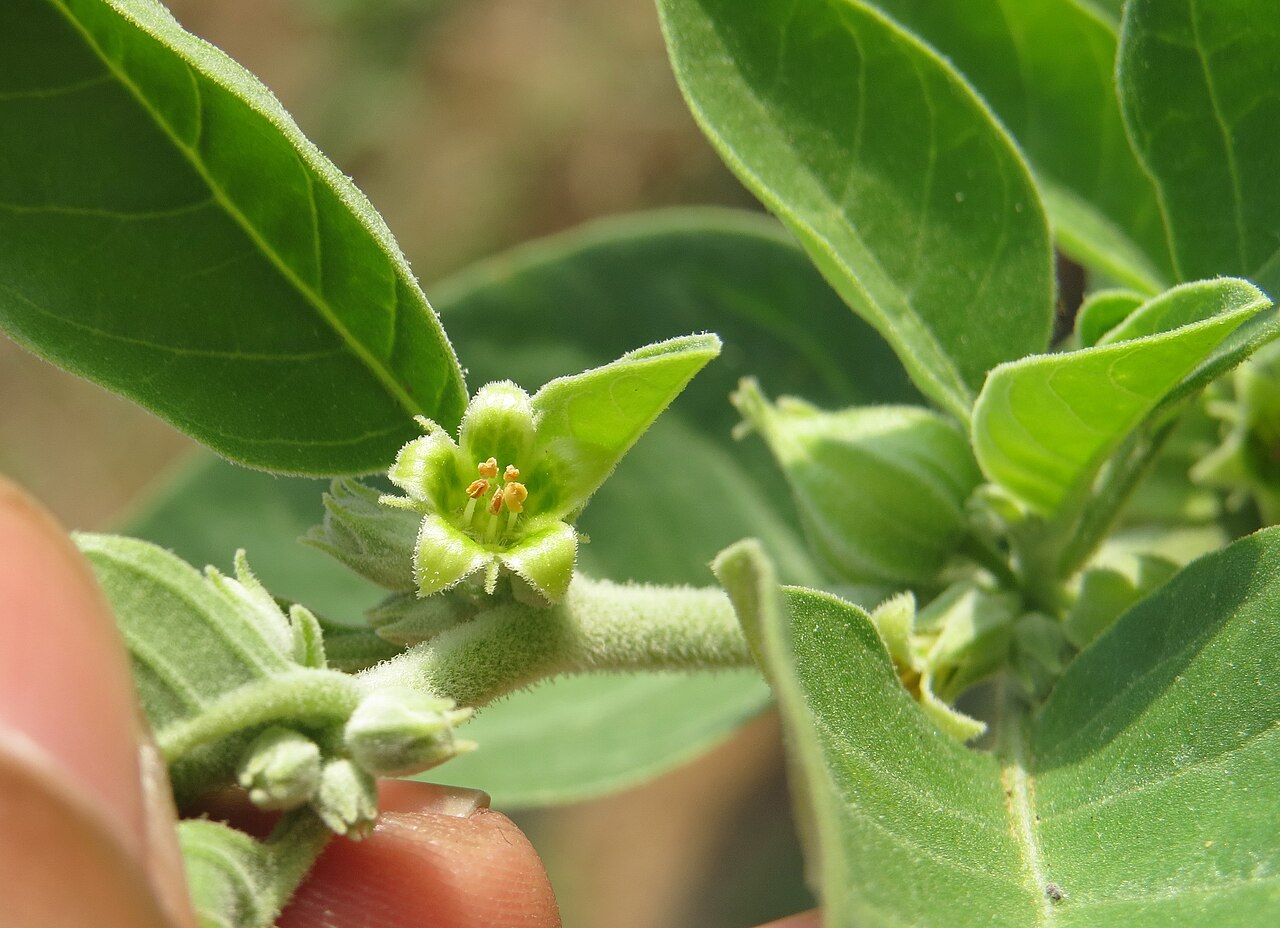
The named KSM-66 entry is particularly useful for buyers interested in training and recovery as part of their vitality goals. A 2015 randomized study investigated this ashwagandha extract during resistance training and reported favorable selected strength, recovery-related, and body-composition findings. A recognizable ingredient identity makes the research easier to locate and compare than an entirely unspecified plant powder would.
The study's 600-milligram daily regimen over eight weeks differs from the 225-milligram figure displayed on the Max T label, whose serving basis is not visible. It therefore cannot establish the same result from this formula. The extract's selection is still an appealing feature, especially for someone attracted by a product combining botanicals with nutrients. The appropriate expectation is research-informed interest, rather than a promise that every trial endpoint will recur with a different combination, exposure, or training routine.
Free and total measurements answer related questions
The current Max T presentation discusses hormone availability, including free and total testosterone. Those terms refer to related but different measurements, and they are not interchangeable with muscle gain, libido, or confidence. A study can report a laboratory change without demonstrating a meaningful difference in daily function. Understanding that distinction helps a buyer read the product's positioning with more precision.
A stronger evidence package would identify the exact finished formula, the confirmed serving, the study population, and the primary outcome before presenting a percentage. The reviewed sources did not independently establish a randomized trial of the complete current Max T product. That is a statement about the scope of this review, rather than a claim to have catalogued every possible document. The most substantiated positive case therefore rests on formulation detail, convenience, and the separate ingredient literature.
The mineral contribution is easy to compare
Zinc, magnesium, and vitamin B6 make Max T relevant to an audit of the whole supplement routine. Their physiological roles are established, and the label's forms and quantities let a reader see what would be added. Zinc is displayed at 204 percent of the Daily Value, magnesium at 30 percent, and vitamin B6 at 441 percent. Those figures are useful reference points when another multivitamin or mineral product is already being used.
More nutrient is not automatically more testosterone in a person whose intake is adequate. A randomized trial of a zinc-magnesium-vitamin B6 combination in resistance-trained men did not show enhanced training adaptations. NIH also places the adult zinc upper intake level at 40 milligrams per day, so the 22.5-milligram label contribution should be counted alongside other products. This makes the panel a practical strength: the amounts can be reviewed and compared instead of being hidden within an unquantified nutrient blend.
The supporting complex adds breadth
The 975-milligram ImperiFlow Circulation Complex lists arginine, tribulus, horny goat weed, tongkat ali, maca, saw palmetto, citrulline, Butea superba, muira puama, damiana, Xanthoparmelia scabrosa, and rhodiola. For a buyer who values a broad formulation, gathering these categories in one product can be attractive. It reduces the number of separate ingredient purchases needed to explore the overall men's-wellness concept.
The combined total does not reveal individual amounts, and breadth does not establish clinical synergy. A relevant arginine trial used 6 grams daily in a specific erectile-dysfunction population, exceeding the entire listed supporting-complex amount. It cannot be used as a dose-matched demonstration for Max T. Hormone outcomes, circulation-related endpoints, and sexual experience also remain different questions. The complex is best appreciated as part of the product's formulation style, with precise component exposures left for manufacturer clarification.
An all-in-one purchase has a practical audience
Max T may appeal most to someone who wants several ingredient categories organized into one branded routine. That approach can simplify shopping and reordering, particularly when compared with independently selecting multiple extracts and nutrient products. A buyer interested in isolating one ingredient may prefer a different format, but the preference for consolidation is a genuine reason to consider this one. Practical benefits do not need to be dressed up as clinical outcomes to matter.
The exact capsule materials must also fit the purchaser. The page uses vegan-friendly and no-artificial-color wording, while the displayed label lists gelatin and FD&C colorants. Resolve that difference before ordering if those requirements matter. Ashwagandha also warrants an individual suitability check with thyroid disease, liver concerns, or interacting medicines. These concise details make the product easier to match to the right audience rather than assuming that one formula fits every men's-wellness routine.

What a useful manufacturer answer would include
A buyer can make the research conversation productive by asking for the current complete Supplement Facts, directions, and extract specifications. For quality, a certificate tied to the purchased lot would clarify what was tested and by whom. Seller statements about manufacturing and third-party checks are a starting point, while independently verified batch documentation would provide more specific reassurance. Identity and contaminant testing answer different questions from clinical effectiveness.
For hormone claims, request the actual finished-product study if one is being cited. Confirm that the tested formula and daily exposure match the current bottle, and check whether a reported number represents a placebo comparison or only a within-group change. These are practical questions, not an expectation that every buyer become a researcher. They help preserve enthusiasm for a promising formulation while making the evidence attached to the purchase easier to understand.
Choose meaningful comparisons before looking at percentages
It is useful to decide what would make a purchase worthwhile before focusing on a promotional number. A man choosing a broad formula for organizational convenience can compare labels, order totals, and the number of separate purchases it replaces. A man mainly interested in a particular botanical can compare extract identity and daily exposure. A man concerned about a clinical hormone problem needs a different level of evidence and assessment. These priorities can coexist, but they should not be merged into one vague expectation.
The same approach improves how personal observations are interpreted. Sleep, exercise, food intake, stress, illness, and ordinary measurement variability can influence energy and laboratory results. A favorable period after starting a product does not by itself isolate the cause. Max T can still be attractive as a coordinated supplement choice, with its research background providing context for an informed discussion. The most useful positive assessment identifies what the product actually offers and which question remains unanswered, rather than requiring a single capsule to explain every change in a person’s routine. This leaves the buyer with a clearer decision and a more practical set of questions for the seller or clinician.
The offer gives buyers a choice of commitments
The official page displays $79.95 for one bottle,$139.95 for two, and $179.95 for three, with free U.S. shipping advertised. The multi-bottle totals average approximately $69.98 and $59.98 per bottle. Using the totals avoids the small discrepancy created by the rounded headline bottle prices. Compared with three single bottles at the stated price, the three-pack reduces the displayed merchandise cost by $59.90.
That is a measurable value feature for someone who has confirmed the formula and expects to use the supply. The smaller order represents a lower initial outlay. The product page advertises 30-day satisfaction language, while the reviewed policies describe 90 days and process conditions; confirm the applicable arrangement. The general terms also describe a separate recurring Club program, so read the exact checkout order summary. With those details clear, Max T offers a coherent, appealing option for a research-minded buyer seeking a broad botanical-and-nutrient approach to men's wellness.
Sources & further reading
- Max T Testosterone Support current official product page ↗
- Shop UltraCore official returns policy ↗
- Shop UltraCore official terms ↗
- Endocrine Society: Testosterone Therapy for Hypogonadism ↗
- Fenugreek extract and plasma/saliva testosterone: randomized trial ↗
- PHYSTA Eurycoma longifolia: randomized sexual-well-being trial ↗
- Ashwagandha and resistance training: randomized controlled trial ↗
- ZMA and resistance-training adaptations: randomized trial ↗
- NIH ODS: Zinc ↗
- L-arginine in vasculogenic erectile dysfunction: randomized trial ↗
- NCCIH: Ashwagandha ↗
This article provides educational information. Ask a qualified clinician or pharmacist about your symptoms, medical conditions, medicines and supplement interactions.